
Das perfekte Crêpes-Rezept zu kreieren, hat etwas Magisches. Dünn, zart und vielseitig – Crêpes sind ein beliebtes Gericht, das jede Mahlzeit zu einem besonderen Anlass macht. Ob Sie sie für einen luxuriösen Brunch mit herzhaften Füllungen umhüllen oder für ein üppiges Dessert mit Schokolade beträufeln – die Meisterung der Crêpes eröffnet Ihnen eine Welt voller kulinarischer Möglichkeiten.
Zutaten für das klassische Crêpes-Rezept
- Allzweckmehl (1 Tasse) : Sorgt für die nötige Struktur für zarte, flexible Crêpes.
- Eier (2) : Binden die Zutaten und tragen zum reichen Geschmack und der goldenen Farbe der Crêpes bei.
- Milch und Wasser (je 1/2 Tasse) : Die Kombination aus Milch und Wasser sorgt dafür, dass der Teig die perfekte Konsistenz hat, dünn genug, um ihn in der Pfanne zu verteilen, aber reichhaltig genug, um köstlich zu schmecken.
- Salz (1/4 Teelöffel) : Verstärkt den Geschmack der Crêpes und macht sie unwiderstehlich, egal ob süß oder herzhaft serviert.
Schritt-für-Schritt-Anleitung zum perfekten Crêpe
Den Teig mischen
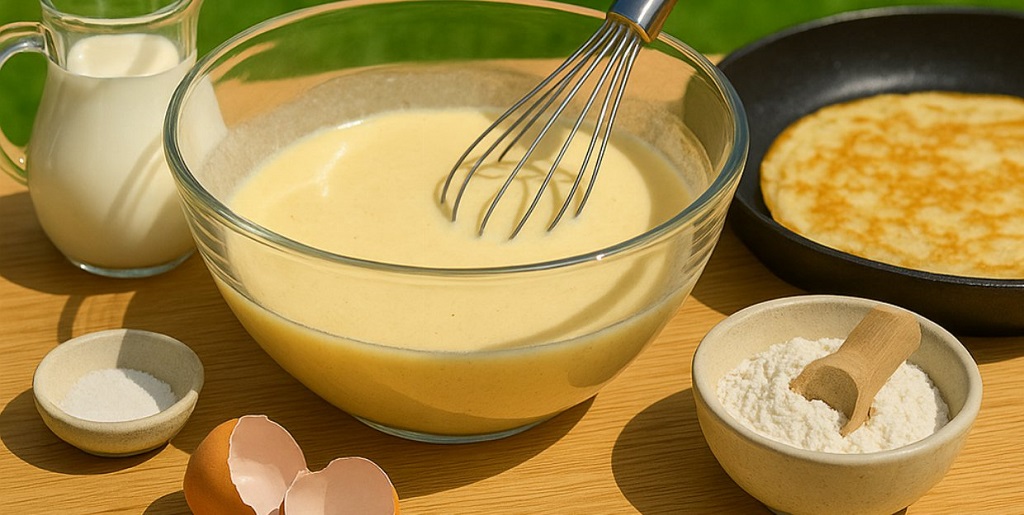
Das Geheimnis perfekter Crêpes liegt im Teig. Verquirlen Sie zunächst Mehl und Eier und rühren Sie nach und nach Milch und Wasser ein, um Klumpen zu vermeiden. Dieses anfängliche Mischen ist entscheidend, da es die Grundlage für die Textur Ihrer Crêpes bildet. Lassen Sie den Teig 30 Minuten ruhen, damit das Mehl die Flüssigkeit aufnehmen kann und ein glatter, zusammenhängender Teig entsteht.
Crêpes zubereiten
Erhitzen Sie eine leicht geölte Pfanne bei mittlerer Hitze. Geben Sie eine kleine Menge Teig in die Mitte und schwenken Sie die Pfanne dabei in kreisenden Bewegungen, um den Teig gleichmäßig zu verteilen. So wird jeder Crêpe gleichmäßig dünn. Das goldbraune Backen auf beiden Seiten verleiht nicht nur Geschmack, sondern erzeugt auch die typischen, leicht knusprigen Ränder, die einen gelungenen Crêpe auszeichnen.
Anpassen Ihrer Crêpes
Die Vielseitigkeit von Crêpes macht ihren Charme aus. Zum Frühstück füllen Sie sie mit frischem Obst und einem Klecks Joghurt oder Schlagsahne. Für eine herzhafte Variante eignen sich Käse, Spinat oder sogar fein gehackte und sautierte Pilze. Die Möglichkeiten sind endlos und ermöglichen Ihnen, bei jedem Crêpe Ihrer Kreativität freien Lauf zu lassen.
Erweiterte Tipps für Crêpes-Rezepte
Um Ihre Crêpes noch besser zu machen, experimentieren Sie mit der Teigkonsistenz. Durch Anpassen des Milch-Wasser-Verhältnisses können Sie die Textur verändern und Ihre Crêpes je nach Wunsch geschmeidiger oder fester machen. Wenn Sie den Teig über Nacht ruhen lassen, können sich die Aromen intensiver entfalten und erhalten einen reichhaltigeren Geschmack.
Die Kunst der Herstellung zarter Crêpes
Crepes, those wonderfully thin and delicate pancakes, have a reputation for elegance and flexibility that few other desserts or breakfast items can claim. Making crepes involves a ballet of mixing just the right ingredients to a perfect consistency and mastering the art of cooking them to just the right degree of thinness and tenderness. The pleasure of making crepes lies in their simplicity and the immediate gratification they provide, whether wrapped around sweet or savory fillings.
Simplicity Meets Sophistication in Every Bite
What sets crepes apart is their astounding simplicity, coupled with the sophistication they bring to the table. With just a few basic ingredients flour, eggs, milk, and a pinch of salt you can create a base that transforms into an elegant dish with the right technique and a little creativity. This recipe not only guides you through creating the basic batter but also inspires you to explore both classic and innovative ways to enjoy crepes.
Celebrating Versatility in Culinary Form
The versatility of crepes is celebrated worldwide, making them a beloved dish in many cultures. They can be dressed up for a decadent dessert with Nutella and strawberries or served as a savory main with ham and cheese. This adaptability makes learning to make crepes an invaluable skill, as they can be adapted for any meal, respecting dietary preferences and ingredient availability.
Mastering the Technique for Perfect Crepes
The technique of making the perfect crepe is as important as the ingredients. Achieving the iconic thinness requires a good swirl of the pan, and cooking them to just the right level of doneness without browning too much is an art. This recipe provides step by step instructions to help you master these techniques, ensuring your crepes are perfect every time.
Navigating Common Crepe Making Challenges
Despite their simple ingredient list, crepes can be tricky to perfect. One common challenge is achieving the right batter consistency, which should be smooth and fluid but not overly liquid. This consistency is crucial for spreading the batter thinly and evenly across the pan. Adjustments might be needed based on the flour type or even the humidity in your kitchen.
The Delicate Balance of Cooking Crepes
Cooking crepes requires a delicate balance of temperature and timing. Too hot, and the crepes can burn or cook too quickly, becoming crispy rather than soft and pliable. Too cool, and they may become thick and heavy. This section provides tips on how to find and maintain the perfect heat in your pan.
Flavor Enhancements and Customizations
Another challenge lies in flavoring and filling crepes. While the basic crepe is delightful on its own, the addition of flavors and fillings can elevate it significantly. This can be a creative joy but also a culinary challenge, as not all fillings work well with the delicate nature of crepes. Recommendations for compatible flavors and textures are provided to ensure delicious outcomes.
Maintaining Consistency and Quality
Maintaining consistency from one crepe to another can be difficult, especially for beginners. The thickness of the batter in the pan needs to be uniform, and each crepe should be cooked similarly to ensure they stack and present well if serving to guests. Techniques to achieve this consistency are discussed, helping you refine your crepe making process.
Challenges in Crepe Preparation
While crepes are fundamentally simple, achieving the perfect thinness and consistency requires practice. One common challenge is preventing the batter from becoming too thick or runny. This balance affects how the crepes cook and their final texture. Using a ladle or measuring cup can help you pour the right amount of batter each time, ensuring uniform thickness.
Overcoming Cooking Obstacles
Controlling the temperature is another critical aspect. If the pan is too hot, the crepes can burn before they cook through. If it’s too cool, they may turn out too thick and lack the delightful, light texture. Finding the sweet spot for your stove and pan through trial and error is key.
Ensuring Flavor and Presentation
The presentation of crepes is nearly as important as their flavor. Achieving that impeccable, lacy pattern with light browning requires a combination of correct batter consistency and pan control. For flavor enhancement, infusing your batter with vanilla or a small amount of liqueur (if appropriate) can add a subtle complexity that makes your crepes go from good to great.
Whether you’re a seasoned chef or a home cook, the journey of perfecting crepes is filled with learning and enjoyment. By embracing the challenges and exploring the versatility of flavors and fillings, you can turn this simple dish into a gourmet experience.
These additional paragraphs not only enrich the narrative with deeper insights into making crepes but also guide the reader through common pitfalls and professional tips to enhance their cooking journey.
For additional tips on baking techniques and flavor variations, visit our comprehensive guide to crafting perfect pastries
FAQs
What is the secret to making smooth crepe batter?
The key to smooth crepe batter is in the mixing. Always sift your flour to prevent lumps, and gradually incorporate your liquids milk and water while whisking consistently. Letting the batter rest for about 30 minutes before cooking also allows the flour to absorb the liquids fully, resulting in a smoother batter.
Can I make crepe batter ahead of time?
Yes, you can make crepe batter ahead of time. In fact, resting the batter in the refrigerator for a few hours or overnight can help improve the texture and flavor of the crepes. Just be sure to give it a good stir before you start cooking as the ingredients may have settled.
How do I achieve thin, evenly cooked crepes?
Für dünne, gleichmäßig gegarte Crêpes achten Sie darauf, dass die Pfanne die richtige Temperatur hat. Zu heiß, sonst garen die Crêpes zu schnell, zu kalt, sonst werden sie nicht schön braun. Geben Sie eine kleine Menge Teig in die Mitte der Pfanne und schwenken Sie die Pfanne sofort in kreisenden Bewegungen, um den Teig dünn zu verteilen. Backen Sie jede Seite etwa 1–2 Minuten lang goldbraun.
Wie kann ich verhindern, dass Crêpes an der Pfanne kleben bleiben?
Damit Crêpes nicht kleben bleiben, achten Sie darauf, dass Ihre Pfanne gut eingebrannt oder antihaftbeschichtet und ausreichend erhitzt ist. Es kann auch hilfreich sein, die Pfanne vor jedem Crêpe leicht mit Butter oder Öl einzufetten. Bei Verwendung eines Antihaftsprays ist eine leichte Anwendung am besten.
Was sind einige Ideen für Crêpe-Füllungen?
Crêpes sind unglaublich vielseitig und können mit den unterschiedlichsten Zutaten gefüllt werden. Beliebte Füllungen für süße Crêpes sind Nutella, Fruchtkonfitüre, Honig mit frischen Fruchtscheiben und Schlagsahne. Für herzhafte Crêpes reichen die Füllungen von Schinken und Käse bis hin zu sautiertem Gemüse, Rührei und Räucherlachs. Experimentieren Sie mit verschiedenen Kombinationen, um Ihre Favoriten zu finden.
Wie bewahre ich übrig gebliebene Crêpes auf?
Restliche Crêpes können bis zu fünf Tage im Kühlschrank aufbewahrt werden. Legen Sie sie zwischen Lagen Wachs- oder Pergamentpapier und legen Sie sie in einen luftdichten Behälter oder einen wiederverschließbaren Plastikbeutel. Zum Aufwärmen einfach in einer Pfanne bei mittlerer Hitze oder in der Mikrowelle einige Sekunden lang erhitzen, bis sie durchgewärmt sind.
Kann ich Crêpes einfrieren?
Ja, Crêpes können bis zu zwei Monate eingefroren werden. Zum Einfrieren die vollständig abgekühlten Crêpes mit Backpapier dazwischen stapeln, damit sie nicht aneinander kleben. Den Stapel fest in Frischhaltefolie einwickeln und in einen gefrierfesten Beutel oder Behälter geben. Über Nacht im Kühlschrank auftauen lassen und vor dem Servieren wieder leicht erwärmen.