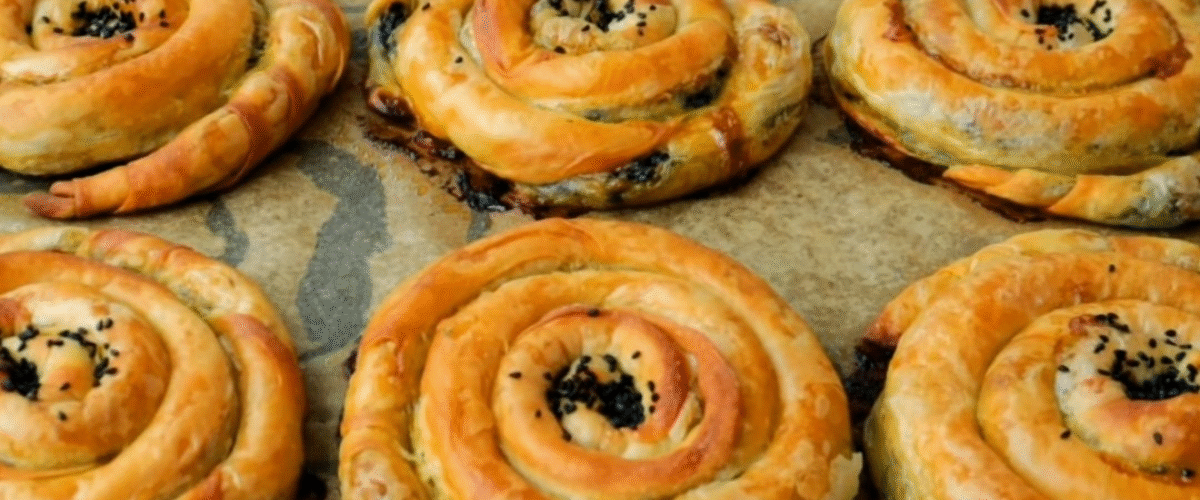
Dieser traditionelle türkische Spinat-Börek ist der Höhepunkt der osmanischen Küche. Er kombiniert hauchdünnen hausgemachten Teig mit einer reichhaltigen Spinatfüllung. Diese liebevolle Zubereitung erzeugt blättrige, goldene Schichten, die perfekt gewürzten Spinat und Zwiebeln umhüllen. Das Ergebnis ist ein Gericht, das sowohl elegant genug für besondere Anlässe als auch wohltuend genug für den Alltag ist. Die Kunst, Börek von Grund auf selbst zuzubereiten, verbindet Sie mit jahrhundertealter türkischer Kochtradition und bietet gleichzeitig eine unglaublich sättigende und nahrhafte Mahlzeit.
Zutaten
Für den Mürbeteig:
- 15 Teelöffel (75 g) Salz
- 2 Tassen (480 ml) heißes Wasser
- 7 Tassen (875 g) Mehl oder Allzweckmehl
- 150 g (⅔ Tasse) Butter, geschmolzen
- ½ Glas türkischer Tee (60 ml/¼ Tasse) Pflanzenöl
Für die Spinatfüllung:
- 5-6 Esslöffel (75-90 ml) Olivenöl
- 2 kleine Zwiebeln, fein gehackt (ca. 300 g)
- 650 g frischer Spinat, gründlich gewaschen und gehackt
- 15 Teelöffel (75 g) rote Pfefferflocken (Pul Biber)
- 1 Teelöffel Salz
- ½ Teelöffel frisch gemahlener schwarzer Pfeffer
Für die Montage und Fertigstellung:
- Extra Pflanzenöl zum Bestreichen
- 2 Esslöffel Schwarzkümmelsamen (Nigellasamen)
- Zusätzliche geschmolzene Butter zum abschließenden Bestreichen
Traditionelle Beilagen:
- Türkischer Joghurt oder Tzatziki-Sauce
- Ayran (türkisches Joghurtgetränk)
- Gemischte Oliven
- Türkischer Weißkäse oder Feta
- Frische Tomaten, in Scheiben geschnitten
- Frische Gurken, in Scheiben geschnitten
Schritt-für-Schritt-Anleitung
Zubereitung des Mürbeteigs
Schritt 1: Lösen Sie in einer großen Rührschüssel die 15 Teelöffel Salz vollständig im heißen Wasser auf. Rühren Sie, bis sich das Salz vollständig aufgelöst hat und das Wasser klar ist. Lassen Sie die Mischung etwas abkühlen, bis sie warm, aber nicht kochend heiß ist.
Schritt 2: Geben Sie das Mehl nach und nach unter ständigem Rühren mit einem Holzlöffel in das Salzwasser. Geben Sie zunächst etwa 2 Tassen Mehl hinzu und rühren Sie, bis ein zottiger Teig entsteht.
Schritt 3: Geben Sie unter ständigem Rühren nach und nach Mehl hinzu, bis Sie mit dem Löffel nicht mehr rühren können. Geben Sie die Mischung auf eine saubere Arbeitsfläche und kneten Sie sie mit der Hand. Geben Sie dabei nach Bedarf das restliche Mehl hinzu.
Schritt 4: Den Teig 8–10 Minuten kräftig kneten, bis er glatt, elastisch und leicht klebrig ist. Der Teig sollte weich und geschmeidig sein, nicht klebrig oder trocken. Bei Bedarf etwas Wasser oder Mehl hinzufügen.
Schritt 5: Den Teig zu einer glatten Kugel formen, in eine leicht geölte Schüssel geben und mit einem feuchten Küchentuch abdecken. Den Teig 10 Minuten ruhen lassen, damit sich das Gluten entspannen kann.
Den Teig teilen und ruhen lassen
Schritt 6: Nach der Ruhezeit den Teig auf eine leicht bemehlte Fläche geben und mit einem scharfen Messer oder Teigschaber in 18 gleich große Portionen teilen. Jedes Stück sollte etwa 50–60 g wiegen.
Step 7: Roll each portion into a smooth ball by cupping it in your palm and rolling it against the work surface. Place all the dough balls on a floured tray or baking sheet.
Step 8: Cover the dough balls with a slightly damp kitchen towel and let them rest for another 10 minutes. This second rest is crucial for achieving paper-thin layers.
Creating the Butter-Oil Mixture and Layering
Step 9: In a small bowl, combine the melted butter with the ½ Turkish tea glass of oil. Mix well to create a smooth butter-oil mixture that will be used for brushing between layers.
Step 10: Working with one dough ball at a time, roll each ball out on a lightly floured surface into a thin circle approximately 20cm (8 inches) in diameter. The dough should be thin but not transparent.
Step 11: Brush each rolled circle generously with the butter-oil mixture, ensuring complete coverage from edge to edge.
Step 12: Stack the brushed circles in groups of three, creating 6 stacks total. Each stack should have 3 layers with butter-oil mixture between each layer and on top.
Step 13: Cover the stacks with plastic wrap or a damp towel and let them rest for 30-35 minutes. This extended rest allows the dough to relax further and makes final rolling easier.
Preparing the Spinach Filling
Step 14: While the dough stacks are resting, heat the olive oil in a large skillet or wide pan over medium heat. Add the finely chopped onions and sauté for 5-7 minutes until they become translucent and lightly golden.
Step 15: Add the chopped spinach to the pan in batches if necessary, as fresh spinach takes up considerable space initially. Cook, stirring frequently, until the spinach wilts completely and releases its moisture.
Step 16: Continue cooking the spinach mixture for 8-10 minutes, stirring occasionally, until most of the liquid has evaporated. The mixture should be relatively dry to prevent soggy borek.
Step 17: Season the spinach mixture with the red pepper flakes, salt, and black pepper. Stir well to distribute the seasonings evenly throughout the mixture.
Step 18: Remove the spinach filling from heat and set aside to cool completely. The filling must be at room temperature before assembly to prevent the dough from becoming soggy.
Final Assembly and Shaping
Step 19: Preheat your oven to 190°C (375°F). Line a large baking sheet with parchment paper or lightly grease it with oil.
Step 20: Working with one stack at a time, roll out each 3-layer stack on a lightly floured surface until it’s approximately 40cm (16 inches) in diameter and paper-thin. You should be able to see your hand through the dough when held up to the light.
Step 21: Spread approximately 2-3 tablespoons of the cooled spinach filling along one edge of the rolled-out dough, leaving a 2cm border on the sides and bottom.
Step 22: Carefully roll the dough around the filling, creating a tight log. Tuck in the sides as you roll to prevent the filling from escaping during baking.
Step 23: Place the filled borek seam-side down on the prepared baking sheet. Repeat this process with all remaining dough stacks and filling.
Final Preparation and Baking
Step 24: Brush the tops and sides of all borek rolls generously with additional oil to ensure a golden, crispy exterior during baking.
Step 25: Sprinkle the black cumin seeds evenly over the tops of the borek rolls, pressing them gently into the surface so they adhere during baking.
Step 26: Using a sharp knife, make 3-4 shallow diagonal cuts across the top of each borek roll. This allows steam to escape and prevents the pastry from splitting during baking.
Step 27: Bake for 45-50 minutes, rotating the baking sheet once halfway through, until the borek are deep golden brown and crispy on all sides.
Step 28: Remove from the oven and let cool for 5-10 minutes before serving. This brief cooling period allows the layers to set and makes slicing easier.
Nutritional Information
Prep Time: 2 hours (including resting time)
Cooking Time: 50 minutes
Total Time: 2 hours 50 minutes
Servings: 12-15 portions
Per Serving (approximate):
- Calories: 285
- Carbohydrates: 42g
- Protein: 8g
- Fat: 10g
- Fiber: 4g
- Sugar: 3g
- Sodium: 465mg
- Iron: 3.2mg (from spinach)
Variations and Substitutions
Cheese Spinach Borek: Add 200g of crumbled feta cheese or Turkish white cheese to the spinach filling for extra richness and protein. Reduce the salt in the filling accordingly.
Meat Borek: Replace the spinach filling with a mixture of 500g ground lamb or beef, sautéed onions, and traditional Turkish spices including cinnamon, allspice, and pine nuts.
Whole Wheat Version: Substitute up to half of the pastry flour with whole wheat flour for added nutrition. You may need to add slightly more water to achieve the proper dough consistency.
Vegan Option: Replace the butter in the dough with additional vegetable oil or vegan butter substitute. Ensure all accompaniments are plant-based.
Herb Enhancement: Add 2 tablespoons of fresh dill and 1 tablespoon of fresh mint to the spinach filling for additional Mediterranean flavors.
Make-Ahead Method: Assemble the borek completely, then freeze on baking sheets. Once frozen solid, transfer to freezer bags and store for up to 3 months. Bake directly from frozen, adding 10-15 minutes to the cooking time.
Häufig gestellte Fragen
Kann ich gekauften Filoteig verwenden, anstatt ihn selbst zu machen? Selbstgemachter Teig bietet zwar einen besseren Geschmack und eine bessere Konsistenz, Sie können ihn aber auch durch gekauften Filoteig ersetzen. Verwenden Sie 12–15 Blätter, bestreichen Sie jedes mit der Butter-Öl-Mischung und legen Sie sie in Gruppen von 3–4 Blättern übereinander, bevor Sie sie füllen und ausrollen.
Warum ist mein Börek nicht knusprig genug? Stellen Sie sicher, dass die Spinatfüllung vollständig abgekühlt und relativ trocken ist, bevor Sie sie zubereiten. Bestreichen Sie sie außerdem vor dem Backen großzügig mit Öl und vermeiden Sie es, den Börek während des Abkühlens abzudecken, da eingeschlossener Dampf die Kruste aufweichen lässt.
Wie bewahre ich übrig gebliebenen Börek auf? Abgekühlten Börek können Sie in einem luftdichten Behälter bis zu 4 Tage im Kühlschrank aufbewahren. Um ihn wieder knusprig zu machen, erhitzen Sie ihn 8–10 Minuten lang im 180 °C heißen Backofen, anstatt ihn in der Mikrowelle zu verwenden.
Kann ich den Teig einen Tag im Voraus zubereiten? Ja, Sie können den Teig während der ersten Ruhezeit vorbereiten, fest in Frischhaltefolie einwickeln und über Nacht im Kühlschrank aufbewahren. Vor dem Teilen und Weiterverarbeiten des Rezepts auf Zimmertemperatur bringen.
Wie erwärmt man Börek am besten? Am besten erwärmen Sie übrig gebliebenen Börek im vorgeheizten Backofen bei 180 °C (350 °F) 8–12 Minuten lang, bis er durchgewärmt und knusprig ist. Vermeiden Sie die Verwendung in der Mikrowelle, da der Teig dadurch matschig wird.
Dieser authentische Spinat-Börek verkörpert das Herzstück der türkischen Hausmannskost, wo Zeit und Sorgfalt einfache Zutaten in außergewöhnliche kulinarische Erlebnisse verwandeln. Der Kontrast zwischen der knusprigen, blättrigen Kruste und der herzhaften, nach Kräutern duftenden Spinatfüllung ergibt ein Gericht, das sowohl sättigend als auch raffiniert ist. Servieren Sie es mit traditionellen türkischen Beilagen für ein umfassendes kulinarisches Erlebnis, das das reiche Erbe der osmanischen Küche würdigt und gleichzeitig eine nahrhafte, schmackhafte Mahlzeit bietet, die Familien am Tisch zusammenbringt.