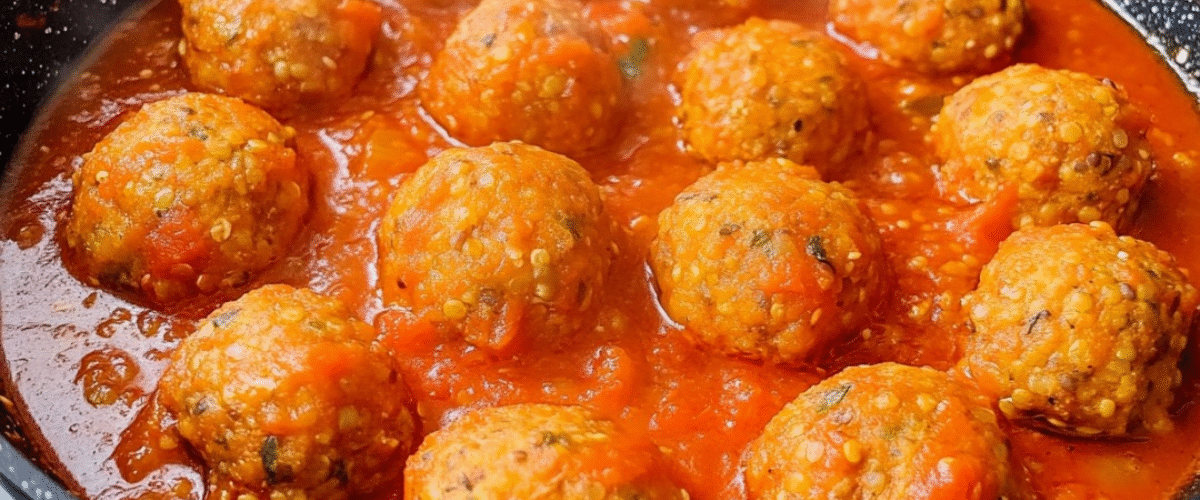
Diese proteinreichen veganen Linsenbällchen in reichhaltiger Tomatensauce bieten den gleichen Genuss und die gleiche Sättigung wie traditionelle Fleischbällchen und sind dabei rein pflanzlich. Dieses herzhafte Rezept verwandelt einfache Linsen in aromatische, zarte Bällchen, die in einer herzhaften Tomatensauce köcheln – eine vollwertige Mahlzeit, die selbst Fleischesser lieben werden. Reich an pflanzlichem Eiweiß und Ballaststoffen beweisen diese Linsenbällchen, dass veganes Kochen sowohl nahrhaft als auch unglaublich lecker sein kann.
Zutaten
Für die Linsenbällchen:
- 250 g (1¼ Tassen) rote oder grüne Linsen, getrocknet
- 1 mittelgroße Zwiebel, fein gehackt
- 1 mittelgroße Karotte, gerieben
- 2 Knoblauchzehen, gehackt
- 4-5 Esslöffel Allzweckmehl
- 2-3 Esslöffel Pflanzenöl
- 1 Teelöffel Salz
- ½ Teelöffel schwarzer Pfeffer
- 1 Teelöffel süßes Paprikapulver
- 2 Esslöffel frische Petersilie, gehackt
Für die Tomatensauce:
- 70 g (5 Esslöffel) Avocadoöl oder Pflanzenöl
- 1 Esslöffel Allzweckmehl
- 80 g (⅓ Tasse) Tomatenmark
- 500 ml (2 Tassen) warmes Wasser oder Gemüsebrühe
- Salz und Pfeffer nach Geschmack
- ½ Teelöffel Paprika
- 2 Esslöffel frische Petersilie, gehackt zum Garnieren
Schritt-für-Schritt-Anleitung
Zubereitung der Linsen
Die Linsen 2-3 Mal gründlich unter fließendem kaltem Wasser abspülen, bis das Wasser klar ist. Die gereinigten Linsen in eine große Schüssel geben und vollständig mit Wasser bedecken. 2-3 Stunden einweichen lassen, dadurch werden sie weicher und lassen sich leichter pürieren.
Nach dem Einweichen die Linsen gründlich abtropfen lassen und in eine Küchenmaschine oder einen Hochgeschwindigkeitsmixer geben. Verarbeiten Sie die Mischung, bis eine glatte, pastenartige Konsistenz erreicht ist. Die Mischung sollte zusammenhalten, aber nicht vollständig flüssig sein. Geben Sie bei Bedarf einen Esslöffel Wasser hinzu, um das Mixen zu erleichtern, aber vermeiden Sie, dass die Mischung zu feucht wird.
Erstellen der Gemüsebasis
2-3 Esslöffel Pflanzenöl in einer großen Pfanne bei mittlerer Hitze erhitzen. Die fein gehackte Zwiebel hinzufügen und 3-4 Minuten braten, bis sie glasig und weich ist. Die geriebene Karotte und den gehackten Knoblauch hinzufügen und weitere 3-4 Minuten braten, bis das Gemüse weich ist.
Die Gemüsemischung mit Salz, Pfeffer und Paprika würzen und gut umrühren, damit sich die Gewürze gleichmäßig verteilen. Weitere 2–3 Minuten köcheln lassen, damit sich die Aromen vermischen. Vom Herd nehmen und etwas abkühlen lassen.
Linsenbällchen formen
In einer großen Rührschüssel die verarbeiteten Linsen mit der gekochten Gemüsemischung vermengen. Gründlich verrühren, bis alle Zutaten gut vermischt sind. Nach und nach 3–4 Esslöffel Mehl hinzufügen, beginnend mit 3 Esslöffeln und bei Bedarf mehr hinzufügen, um die richtige Konsistenz zu erreichen.
The mixture should be firm enough to hold its shape when formed into balls but not so dry that it crumbles. With clean, slightly damp hands, form the mixture into golf ball-sized portions, rolling them gently between your palms to create smooth, round balls. You should have approximately 12-15 lentil balls.
Preparing the Tomato Sauce
In the same large skillet used for the vegetables, heat the avocado oil over medium heat. Add 1 tablespoon of flour to the oil, whisking constantly to create a light roux. Cook for 1-2 minutes until the flour is lightly golden and fragrant.
Gradually add the tomato paste, whisking continuously to prevent lumps from forming. Cook the tomato paste mixture for 2-3 minutes until it darkens slightly and becomes aromatic. Slowly pour in the warm water or vegetable broth while whisking constantly to create a smooth sauce.
Season the sauce with salt, pepper, and paprika. Bring the mixture to a gentle simmer, then reduce heat to low and cook for 2-3 minutes until the sauce thickens slightly.
Cooking the Lentil Balls
Carefully place the formed lentil balls into the simmering tomato sauce, ensuring they don’t overcrowd the pan. Cover the skillet and cook on low heat for 5 minutes without disturbing the balls to allow them to set.
Gently turn each lentil ball using a spoon or tongs, being careful not to break them. Cover again and simmer for another 5 minutes. The lentil balls should be firm to the touch and heated through completely.
Final Touches and Serving
Taste the sauce and adjust seasoning with additional salt, pepper, or paprika as needed. Sprinkle fresh chopped parsley over the lentil balls and sauce just before serving.
Serve immediately while hot, traditionally accompanied by creamy mashed potatoes, rice, or crusty bread to soak up the delicious tomato sauce.
Nutritional Information and Timing
Soaking Time: 2-3 hours
Preparation Time: 25 minutes
Cooking Time: 20 minutes
Total Time: 45 minutes (plus soaking)
Serves: 4-6
Nutritional Information per serving (3-4 lentil balls with sauce):
- Calories: 285
- Protein: 16g
- Carbohydrates: 35g
- Dietary Fiber: 12g
- Fat: 10g
- Saturated Fat: 1.5g
- Sodium: 485mg
- Potassium: 685mg
- Iron: 25% DV
- Folate: 45% DV
- Magnesium: 18% DV
These vegan lentil balls provide an excellent source of plant-based protein and fiber, making them incredibly filling and nutritious. The high iron and folate content makes this dish particularly beneficial for those following plant-based diets.
Recipe Variations and Substitutions
Lentil Alternatives
While red or green lentils work best for this recipe, you can experiment with other varieties. Brown lentils create a nuttier flavor, while black beluga lentils add visual interest. For a quicker version, you can use pre-cooked canned lentils, though the texture may be slightly different.
Flavor Variations
Enhance the lentil balls with different herbs and spices. Try adding fresh herbs like oregano, basil, or thyme to the mixture. For Mediterranean flavors, include sun-dried tomatoes and olives. For an Indian twist, add curry powder, cumin, and coriander.
Binding Alternatives
If you prefer gluten-free options, substitute the all-purpose flour with chickpea flour, almond flour, or ground flaxseed meal. Each will provide slightly different textures and flavors while maintaining the binding properties needed for the balls to hold together.
Sauce Variations
The tomato sauce can be customized in numerous ways. Add sautéed mushrooms for earthiness, bell peppers for sweetness, or spinach for extra nutrition. For a richer sauce, include a splash of red wine or balsamic vinegar. Coconut milk can be added for creaminess.
Cooking Method Alternatives
These lentil balls can also be baked for a slightly different texture. Place them on a lined baking sheet and bake at 200°C (392°F) for 20-25 minutes, turning once. Then add them to the prepared sauce for the final simmer.
Storage and Make-Ahead Tips
The lentil ball mixture can be prepared up to 24 hours in advance and stored covered in the refrigerator. Form the balls just before cooking for the best texture. Cooked lentil balls in sauce will keep in the refrigerator for up to four days and actually improve in flavor as they sit.
For freezing, place the formed uncooked lentil balls on a baking sheet and freeze until solid, then transfer to freezer bags. They can be cooked directly from frozen, adding a few extra minutes to the cooking time. The complete dish can also be frozen for up to three months.
Frequently Asked Questions
Can I make these lentil balls without soaking the lentils first? While soaking significantly improves the texture and makes blending easier, you can use unsoaked lentils if you have a powerful food processor. You may need to add a bit more water during processing, and the balls might be slightly more dense. Alternatively, you can quickly cook the lentils until just tender, then drain and process them.
Why are my lentil balls falling apart in the sauce? This usually happens when the mixture is too wet or doesn’t have enough binding agent. Make sure to drain the soaked lentils thoroughly and add flour gradually until the mixture holds together well. Also, avoid stirring the balls too vigorously when they first go into the sauce, and let them set for the full 5 minutes before turning.
Can I make this recipe oil-free? Yes, you can make an oil-free version by water-sautéing the vegetables and omitting the oil from the sauce. For the sauce, you can whisk the flour directly with a small amount of water before adding to the tomato paste and remaining liquid. The texture will be slightly different but still delicious.
Wie serviert man diese Linsenbällchen am besten? Traditionell werden sie mit Kartoffelpüree serviert, schmecken aber auch hervorragend zu Nudeln, Reis oder Polenta. Für eine leichtere Variante servieren Sie sie mit einem frischen Salat oder gedünstetem Gemüse. Sie eignen sich auch hervorragend als Sandwichbelag oder als Vorspeise mit knusprigem Brot.
Wie kann ich die Linsenbällchen fester machen? Wenn deine Linsenbällchen zu weich erscheinen, kannst du mehr Mehl hinzufügen oder die Mischung vor dem Formen 30 Minuten im Kühlschrank ruhen lassen. Du kannst die geformten Bällchen auch kurz in etwas Öl anbraten, bevor du sie in die Sauce gibst. Das verleiht ihnen eine festere Oberfläche.
Diese veganen Linsenbällchen in Tomatensoße beweisen, dass pflanzliche Küche genauso sättigend und aromatisch sein kann wie traditionelle Fleischgerichte. Die Kombination aus proteinreichen Linsen, aromatischem Gemüse und reichhaltiger Tomatensoße ergibt eine wohltuende Mahlzeit, die Veganer und Allesesser gleichermaßen anspricht. Ob als Abendessen unter der Woche oder zu besonderen Anlässen – dieses Rezept bietet außergewöhnlichen Nährwert und Geschmack in jedem Bissen.