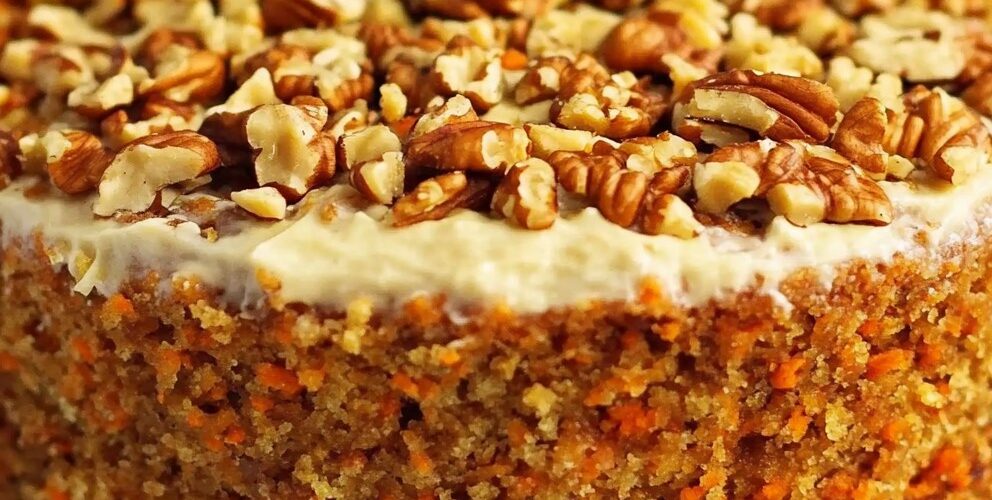
Einleitung: Eine nahrhafte Variante eines beliebten Klassikers
Dieser Haferflocken-Karottenkuchen vereint die wohltuende Wirkung von Hafer, frischen Karotten und Äpfeln mit der Süße von Honig und ist eine gesündere Variante des traditionellen Karottenkuchens. Mit einem leichten Joghurt-Frosting und knackigen Walnüssen bietet dieser Kuchen die perfekte Balance aus Nährstoffen und Genuss. Er ist eine ausgezeichnete Wahl für gesundheitsbewusste Dessertliebhaber, alle, die mehr Obst und Gemüse in ihre Ernährung integrieren möchten, oder alle, die einfach einen saftigen, aromatischen Kuchen ohne übermäßigen Zucker- oder Fettanteil genießen möchten.
Ursprünglich inspiriert von traditionellen Karottenkuchenrezepten, ersetzt diese Version raffiniertes Mehl durch herzhafte Haferflocken und reduziert den Zuckergehalt durch die natürliche Süße von Karotten und Äpfeln. Das Ergebnis ist ein sättigender Leckerbissen, der zum Frühstück, als Nachmittagssnack oder als leichtes Dessert nach dem Abendessen genossen werden kann.
Zutaten
Für den Kuchen:
- 1 Tasse (90 g) Haferflocken
- 1 Tasse (245 g) Naturjoghurt
- 2 große Eier
- 2 Esslöffel (40 g) Honig oder Ahornsirup
- 2 mittelgroße Karotten (ca. 200 g), fein gerieben
- 2 mittelgroße Äpfel (ca. 300 g), gerieben
- 1 Teelöffel gemahlener Zimt
- 1/2 Teelöffel gemahlene Muskatnuss
- 1 Teelöffel Backpulver
- 1/2 Teelöffel Backpulver
- 1/4 Teelöffel Salz
- 1 Teelöffel Vanilleextrakt (optional)
- 2 Esslöffel (30 ml) Olivenöl oder geschmolzenes Kokosöl
Für das Joghurt-Frosting:
- 1 Tasse (245 g) dicker griechischer Joghurt
- 2 Esslöffel Honig oder Ahornsirup
- 1/2 Teelöffel Vanilleextrakt
- Schale einer halben Zitrone (optional)
Für den Belag:
- 1/2 Tasse (50 g) gehackte Walnüsse
- 1 Esslöffel Honig (zum Beträufeln)
Anweisungen
Zubereitung des Kuchenteigs
- Heizen Sie Ihren Backofen auf 175 °C (350 °F) vor. Fetten Sie eine runde Kuchenform (20 cm Durchmesser) ein und legen Sie sie mit Backpapier aus.
- Haferflocken verarbeiten : Geben Sie die Haferflocken in eine Küchenmaschine oder einen Mixer und zerkleinern Sie sie, bis eine grobe Mehlkonsistenz entsteht.
- Flüssige Zutaten mischen : Joghurt, Eier, Honig und Öl in einer großen Schüssel verquirlen, bis alles gut vermischt ist.
- Bereiten Sie Obst und Gemüse vor : Schälen und reiben Sie die Karotten. Schälen, entkernen und reiben Sie die Äpfel. Drücken Sie überschüssige Feuchtigkeit mit einem sauberen Küchentuch oder Papiertüchern aus.
- Alle Zutaten vermengen : Die geriebenen Karotten und Äpfel zur feuchten Mischung hinzufügen. Haferflocken, Zimt, Muskatnuss, Backpulver, Natron, Salz und Vanilleextrakt (falls verwendet) unterrühren. Nur kurz verrühren – nicht zu lange rühren.
Den Kuchen backen
- Gießen Sie den Teig in die vorbereitete Kuchenform und verteilen Sie ihn gleichmäßig.
- Im vorgeheizten Backofen 35–40 Minuten backen oder bis ein Zahnstocher, der in die Mitte gesteckt wird, sauber herauskommt. Der Kuchen sollte goldbraun und leicht elastisch sein.
- Cool the cake: Allow the cake to cool in the pan for 10 minutes, then transfer to a wire rack to cool completely before frosting.
Preparing the Frosting and Assembly
- Make the yogurt frosting: In a medium bowl, mix the Greek yogurt with honey and vanilla extract until smooth. If using, fold in the lemon zest. Refrigerate until ready to use.
- Frost the cake: Once the cake has completely cooled, spread the yogurt frosting evenly over the top.
- Add toppings: Sprinkle the chopped walnuts over the frosting and drizzle with a little extra honey if desired.
- Chill before serving: For best results, refrigerate the frosted cake for at least 30 minutes before serving to allow the frosting to set.
Nutritional Information
Per serving (recipe serves 8):
- Calories: 220 kcal
- Protein: 8g
- Carbohydrates: 30g
- Dietary Fiber: 4g
- Sugars: 18g (mostly from fruits)
- Fat: 9g
- Saturated Fat: 2g
- Cholesterol: 50mg
- Sodium: 220mg
- Potassium: 300mg
- Calcium: 10% DV
- Iron: 6% DV
- Vitamin A: 80% DV
- Vitamin C: 8% DV
Timing:
- Prep Time: 20 minutes
- Cooking Time: 40 minutes
- Cooling Time: 1 hour
- Total Time: 2 hours
Cooking Tips and Tricks
Ingredient Selection and Preparation
- Choose the right oats: Use traditional rolled oats rather than quick oats or steel-cut oats for the best texture.
- Fresh is best: Fresh carrots and apples will provide the most moisture and flavor. Avoid pre-shredded carrots which tend to be dry.
- Moisture control: Removing excess moisture from the grated carrots and apples is crucial – too much moisture will make the cake soggy, but don’t squeeze them completely dry as some moisture is needed.
- Yogurt selection: Full-fat Greek yogurt works best for the frosting as it’s thicker and less likely to make the frosting runny. For a dairy-free option, coconut yogurt is a good substitute.
Baking Success
- Test for doneness: The toothpick test is reliable, but you can also gently press the center of the cake – it should spring back when fully baked.
- Even baking: If your oven has hot spots, rotate the cake pan halfway through baking for even cooking.
- Prevent over-browning: If the top is browning too quickly but the cake isn’t done yet, loosely cover with aluminum foil for the remaining baking time.
Frosting Perfection
- Thicken the yogurt: For a firmer frosting, place the Greek yogurt in a fine-mesh strainer lined with cheesecloth and let it drain in the refrigerator for a few hours or overnight.
- Stable frosting: If you find the yogurt frosting too runny, add 1-2 tablespoons of coconut flour to thicken it without affecting the flavor significantly.
- Frosting timing: Apply the frosting just before serving or at least refrigerate the frosted cake, as the yogurt frosting can soften at room temperature.
Variations and Substitutions
Dietary Adaptations
- Gluten-free option: Ensure you use certified gluten-free oats if you have celiac disease or gluten sensitivity.
- Dairy-free alternative: Replace yogurt with coconut yogurt or almond yogurt in both the cake and frosting.
- Vegan variation: Substitute eggs with flax eggs (2 tablespoons ground flaxseed mixed with 6 tablespoons water, let sit for 15 minutes until gelatinous).
- Sugar-free version: Use a sugar-free sweetener suitable for baking instead of honey, or rely solely on the natural sweetness of fruits by adding a ripe banana to the batter.
Flavor Enhancements
- Spice variations: Add 1/2 teaspoon of ground ginger or cardamom for a different flavor profile.
- Citrus boost: Mix in the zest of one orange or lemon to the cake batter for a refreshing twist.
- Fruit alternatives: Substitute grated pears or zucchini for the apples for different flavor and texture combinations.
- Add-ins: Fold in 1/4 cup of raisins, dried cranberries, or chopped dates for added sweetness and texture.
Topping Ideas
- Nut variations: Replace walnuts with pecans, almonds, or a mixture of seeds (sunflower, pumpkin) for nut allergies.
- Granola topping: Sprinkle homemade or store-bought granola on top for added crunch.
- Fruit decoration: Garnish with thin slices of apple or carrot curls for an elegant presentation.
Common FAQs
1. Can I make this cake ahead of time?
Answer: Yes! The cake (without frosting) can be made 1-2 days in advance and stored in an airtight container at room temperature. The yogurt frosting should be added just before serving or at most a few hours before, keeping the frosted cake refrigerated.
2. How do I store leftovers?
Answer: Store any leftover cake in an airtight container in the refrigerator for up to 3 days. The high moisture content from the fruits and yogurt means this cake is best kept chilled.
3. Can I freeze this cake?
Answer: Yes, you can freeze the unfrosted cake for up to 3 months. Wrap it tightly in plastic wrap followed by aluminum foil. Thaw overnight in the refrigerator before frosting and serving. The yogurt frosting doesn’t freeze well, so it’s best to add fresh frosting after thawing.
4. My cake seems too moist, what happened?
Answer: This could be due to excess moisture from the carrots and apples. Next time, be sure to squeeze out more moisture from the grated fruits and vegetables. Also, check that your oven was at the correct temperature and that the cake baked for the full recommended time.
5. Can I make muffins instead of a cake?
Answer: Absolutely! This batter works well as muffins. Line a 12-cup muffin tin with paper liners and fill each about 3/4 full. Bake at 350°F (175°C) for 20-25 minutes or until a toothpick inserted comes out clean. Top each muffin with a dollop of yogurt frosting and a sprinkle of walnuts.
Storage and Make-Ahead Tips
Refrigeration
- Unfrosted cake: The baked cake without frosting can be stored at room temperature in an airtight container for 1-2 days.
- Frosted cake: Once frosted with yogurt, the cake must be refrigerated. Cover loosely with plastic wrap or store in a cake container in the refrigerator for up to 3 days.
- Frosting: The yogurt frosting can be made up to 2 days ahead and stored in an airtight container in the refrigerator. Stir well before using.
Freezing Guidelines
- Freezing the cake: Cool the unfrosted cake completely, wrap tightly in plastic wrap, then aluminum foil, and freeze for up to 3 months.
- Thawing process: Thaw the frozen cake overnight in the refrigerator while still wrapped. Bring to room temperature for about 1 hour before frosting.
- Individual slices: For portion control, slice the unfrosted cake before freezing. Wrap individual slices and freeze. Thaw a slice at a time as needed.
Make-Ahead Strategies
- Prep components: Grate the carrots and apples a day in advance and store them separately in the refrigerator in airtight containers. Be sure to squeeze out excess moisture before using.
- Dry ingredients: Measure out all dry ingredients and store in a sealed container or bag at room temperature until ready to mix with wet ingredients.
- Walnuts: Toast the walnuts ahead of time for enhanced flavor, cool completely, and store in an airtight container until needed.
Dieser Haferflocken-Karottenkuchen bietet eine gesündere Alternative zu herkömmlichen Desserts, ohne dabei auf Geschmack oder Genuss verzichten zu müssen. Durch die Verwendung gesunder Zutaten wie Hafer, frischem Obst und Gemüse bietet er neben dem Genuss des Kuchens auch ernährungsphysiologische Vorteile. Ob als besonderes Frühstücksvergnügen oder als Dessert ohne schlechtes Gewissen – dieses vielseitige Rezept wird dank seines Geschmacks und seiner gesunden Eigenschaften garantiert zum Liebling.

Hat Ihnen dieser Beitrag gefallen? Teilen Sie ihn mit Ihren Freunden, liken Sie unsere Seite und folgen Sie uns für !
